
Hello world!
Welcome to WordPress. This is your first post. Edit or delete it, then start writing!
Read More →
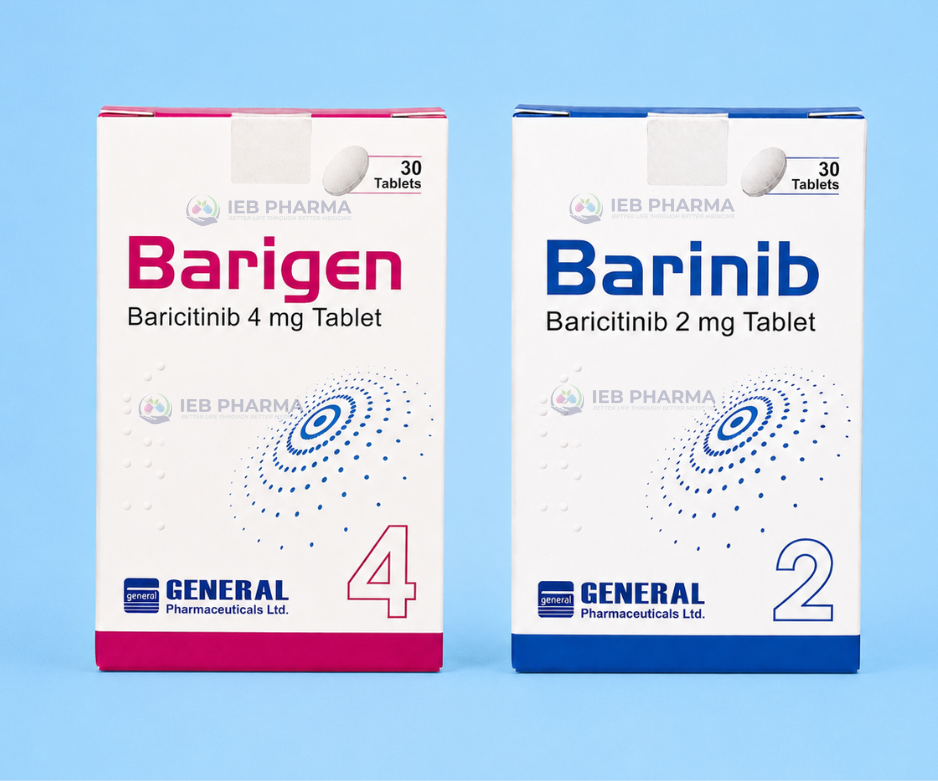
Baricitinib is an oral prescription medicine belonging to the Janus kinase (JAK) inhibitor class. It primarily inhibits JAK1 and JAK2, two enzymes involved in signaling pathways that regulate immune responses and inflammation. By modifying these pathways, baricitinib can reduce abnormal or excessive immune and inflammatory activity associated with certain medical conditions.
Barinib 2 mg and Barigen 4 mg are the products identified for this website as containing baricitinib in 2 mg and 4 mg strengths respectively. Because baricitinib is a prescription medicine that affects the immune system, treatment should be selected and supervised by an appropriately qualified healthcare professional.
The exact approved uses of baricitinib vary between countries. Current regulatory information includes specific uses in conditions such as rheumatoid arthritis and severe alopecia areata, while certain jurisdictions also authorize baricitinib for other conditions, including atopic dermatitis and selected forms of juvenile idiopathic arthritis. In the United States, baricitinib also has a specific labeled use for certain hospitalized adults with COVID-19 requiring specified respiratory support.
Patients should therefore rely on the prescribing information applicable to their country and their individual medical circumstances rather than assuming that every approved use applies everywhere.
General Pharmaceuticals Limited (GPL) is a Bangladesh-based pharmaceutical company engaged in the development and manufacturing of finished pharmaceutical products. The company has been operating since the 1980s and has built a diverse portfolio of medicines serving both local and international markets.
Head Office: General Pharmaceuticals Limited, Sara Aftab Tower, 29 Ring Road, Holdings No. 6/1/A, Shyamoli, Adabor, Dhaka-1207, Bangladesh.
General Pharmaceuticals produces medicines in a range of therapeutic categories and dosage forms. Its manufacturing capabilities include tablets, capsules, oral liquids, ophthalmic preparations, sterile products, injectables, large-volume parenteral solutions, and other pharmaceutical formulations.
The company’s broad manufacturing portfolio allows it to supply different types of medicines designed for various therapeutic needs.
Barigen 4 mg is a baricitinib product manufactured by General Pharmaceuticals Limited. The product contains baricitinib as its active ingredient and is available in a 4 mg strength.
When purchasing or using Barigen 4 mg, it is important to check the product packaging carefully. The brand name, active ingredient, strength, batch number, manufacturing details, expiry date, and relevant registration information should match the information provided on the original packaging.
Manufacturer details help distinguish between pharmaceutical products that contain the same active ingredient but are produced by different companies. They can also help patients, pharmacists, and healthcare professionals identify the correct product and verify packaging information.
Before using Barigen 2 mg and Barigen 4 mg patients should follow the prescription and advice provided by their doctor or pharmacist. Product details should always be checked against the original packaging and applicable regulatory information.
| Product | Active Ingredient | Strength | Company Listed |
|---|---|---|---|
| Barinib | Baricitinib | 2 mg | General |
| Barigen | Baricitinib | 4 mg | General |
Baricitinib is a targeted immune-modifying medicine that works by inhibiting Janus kinase enzymes. It is not conventional cytotoxic chemotherapy and does not work by directly destroying rapidly dividing cells.
JAK enzymes help transmit signals from various cytokines and growth factors to cells. These signals can influence inflammation, immune activity and other biological processes. Baricitinib primarily inhibits JAK1 and JAK2, thereby reducing signaling through selected pathways.
This pharmacological action can provide therapeutic benefits in diseases where excessive immune or inflammatory signaling contributes to the condition. However, because the same pathways are important for normal immune defense, baricitinib can also increase the risk of infections and other serious adverse effects.
For this reason, baricitinib should be used according to a healthcare professional’s prescription and monitoring plan.
The uses of baricitinib depend on the country, indication and applicable regulatory approval.
Baricitinib may be used for certain adults with moderately to severely active rheumatoid arthritis when previous treatments have not provided an adequate response or were not tolerated, according to the applicable product information.
Rheumatoid arthritis is a chronic inflammatory autoimmune disease that can cause joint pain, swelling, stiffness and progressive joint damage. By reducing selected immune signaling pathways, baricitinib can help control inflammatory activity in appropriately selected patients.
Baricitinib is also used in certain patients with severe alopecia areata, an autoimmune condition associated with nonscarring hair loss.
The medicine may help reduce the immune activity involved in hair-follicle disruption. Eligibility and approved age groups vary by jurisdiction.
European authorization includes baricitinib for certain adults and children from 2 years of age with moderate to severe atopic dermatitis when systemic treatment is appropriate.
Atopic dermatitis is an inflammatory skin condition that may cause itching, redness, dryness and recurrent skin lesions.
European authorization also includes selected forms of juvenile idiopathic arthritis in patients from 2 years of age. The precise eligible subtypes and treatment requirements should be confirmed against the applicable local product information.
Current U.S. labeling includes a specific use for baricitinib in hospitalized adults with COVID-19 who require specified respiratory support.
This is a specific medical indication and should not be interpreted as meaning that baricitinib is appropriate for routine treatment of uncomplicated COVID-19 at home.
Barinib 2 mg is identified in the supplied product brief as a baricitinib product containing 2 mg of active ingredient per tablet, subject to verification against the actual product packaging.
Barinib 2 mg should be taken only according to the prescribed regimen. A 2 mg tablet is not automatically appropriate for every patient or every indication. The required dose can depend on the disease being treated, age, kidney function, other medical conditions and concomitant medicines.
Patients should not increase, decrease or change the strength of baricitinib independently.
Barigen 4 mg is identified in the supplied product brief as a baricitinib product containing 4 mg of active ingredient per tablet, subject to verification against actual product documentation.
A 4 mg tablet contains twice the amount of baricitinib found in a 2 mg tablet. However, this does not mean that 4 mg is medically better or appropriate for every patient.
The prescribed strength should always correspond to the patient’s indication and individualized treatment plan.
Baricitinib is taken orally. Depending on the indication and applicable prescribing information, it is generally administered once daily.
The correct dose can vary according to:
The medical condition being treated
Patient age
Kidney function
Treatment response
Other medicines being taken
Relevant safety considerations
The applicable country’s prescribing information
Patients should take the medicine exactly as prescribed.
Do not take additional tablets to compensate for a missed dose unless specifically instructed by a healthcare professional.
Do not change from Barinib 2 mg to Barigen 4 mg, or from 4 mg to 2 mg, without professional medical advice.
Current U.S. product information allows baricitinib to be taken with or without food.
Patients should nevertheless follow the instructions supplied with their specific product and prescription.
The tablet should be taken as directed and should not be altered in a way that conflicts with the product instructions.
Baricitinib affects immune-system signaling and therefore requires careful safety consideration.
One of the most important concerns is the possibility of serious infections. These can include bacterial, fungal and viral infections, as well as tuberculosis.
Before treatment, healthcare professionals may assess a patient’s history of infections and tuberculosis exposure and may perform appropriate screening or laboratory tests.
Patients should contact a healthcare professional promptly if they develop symptoms that could indicate a serious infection.
Other important safety concerns associated with baricitinib and JAK-inhibitor therapy include:
Serious infections
Tuberculosis
Blood clots
Major cardiovascular events
Certain malignancies
Abnormal blood counts
Changes in lipid levels
Liver-related laboratory abnormalities
Serious allergic reactions
The overall risk varies from person to person.
Possible adverse effects vary according to the indication and individual patient.
Reported effects associated with baricitinib can include:
Upper respiratory tract infections
Nausea
Headache
Acne
Herpes infections
Changes in cholesterol or other lipid measurements
Changes in laboratory blood results
Not everyone experiences these effects.
Patients should tell their healthcare professional about persistent, severe or unusual symptoms.
Some adverse effects can be medically serious.
Urgent medical evaluation may be required for symptoms suggesting:
Severe infection
Tuberculosis
Blood clot
Pulmonary embolism
Major cardiovascular event
Severe allergic reaction
Significant blood-count abnormality
For example, sudden difficulty breathing, unexplained chest pain, coughing blood, sudden weakness or swelling and pain in a limb may require urgent assessment.
This information does not replace emergency medical care.
Baricitinib may not be appropriate for everyone.
A healthcare professional should carefully assess patients with:
Active serious infections
Tuberculosis or significant tuberculosis exposure
Certain blood-count abnormalities
Kidney impairment
Significant cardiovascular risk
Previous or increased risk of blood clots
Certain cancer risks or previous malignancy
Pregnancy
Other conditions affecting immune function
Older adults and people with significant cardiovascular, thrombotic or cancer risk factors may require particularly careful assessment.
Kidney function is an important consideration when prescribing baricitinib because the medicine is substantially eliminated through the kidneys.
Patients with impaired kidney function may require a modified dose or may not be appropriate candidates for treatment depending on the indication and severity of renal impairment.
Patients should tell their healthcare professional if they have kidney disease or have previously been told that their kidney function is reduced.
Baricitinib can interact with other medicines or may not be appropriate in combination with certain immune-modifying therapies.
Patients should provide a complete list of:
Prescription medicines
Non-prescription medicines
Vitamins
Herbal products
Dietary supplements
Other immune-modifying medicines
Current U.S. labeling places important limitations on combining baricitinib with other JAK inhibitors, biologic DMARDs and certain potent immunosuppressants for particular indications.
Do not begin another immune-modifying medicine without discussing it with the treating healthcare professional.
Vaccination should be discussed with a healthcare professional before or during baricitinib treatment.
Because baricitinib modifies immune-system activity, certain vaccines require special consideration. In particular, healthcare professionals may need to assess the timing and suitability of live vaccines.
Patients should tell their doctor about recent vaccinations and planned vaccinations.
Pregnancy requires careful consideration before using baricitinib.
Current European product information states that baricitinib should not be used during pregnancy. Anyone who is pregnant, planning pregnancy or could become pregnant should discuss the medicine with a healthcare professional.
Current U.S. labeling advises against breastfeeding during baricitinib treatment and for four days after the final dose.
Because recommendations can vary by regulatory jurisdiction and individual circumstances, patients should obtain individualized advice before using baricitinib during pregnancy or breastfeeding.
Regular medical follow-up may be necessary during treatment.
Depending on the indication and patient’s circumstances, monitoring can include:
Complete blood counts
Liver-related laboratory tests
Lipid measurements
Kidney function
Signs and symptoms of infection
Tuberculosis assessment when appropriate
Cardiovascular and thrombotic risk assessment
Other tests determined by the treating professional
Monitoring helps healthcare professionals determine whether treatment remains appropriate and whether dose changes or treatment interruption may be necessary.
Baricitinib should be stored according to the instructions provided on the specific product packaging and official product information.
Keep medicines away from inappropriate temperatures, moisture and direct environmental exposure when the product instructions require this.
Keep medicines out of the reach of children.
Do not use tablets that are damaged, visibly altered or past their expiration date.
Barinib 2 mg and Barigen 4 mg contain different amounts of the same active ingredient, based on the supplied product information.
Baricitinib 2 mg: contains 2 mg baricitinib.
Baricitinib 4 mg: contains 4 mg baricitinib.
The correct strength is determined by the treatment indication and the patient’s clinical characteristics.
Patients should never assume that taking two 2 mg tablets is equivalent to independently changing their prescribed treatment to a 4 mg regimen. The total dose may be the same in some circumstances, but the prescribed formulation and dosing instructions should always be followed.
Baricitinib is not a medicine that should be self-prescribed.
Although it can provide important therapeutic benefits for appropriately selected patients, it also affects immune function and has potentially serious risks.
A healthcare professional should determine:
Whether baricitinib is appropriate.
Which condition is being treated.
Which strength is appropriate.
How frequently it should be taken.
Whether kidney function requires dose adjustment.
Which laboratory tests are needed.
Whether other medicines should be avoided.
Whether treatment should be interrupted because of infection or abnormal laboratory results.
Whether treatment remains appropriate over time.
Patients should not use Barinib 2 mg or Barigen 4 mg simply because the medicine was prescribed to another person with a similar condition.
Scan the QR code printed on the product box. The QR code will take you to the official General product verification page, where you can complete the verification process.
The QR code will direct you to the General Pharmaceuticals Ltd., E-Verification page, where you can complete the product verification process.
After completing the verification, check the result carefully to confirm whether the product is genuine.
If the verification indicates that the product is fake or unauthorized, do not use it. Report the suspected counterfeit product and take appropriate legal action against the supplier through the Directorate General of Drug Administration (DGDA), World.
Always purchase medicines from licensed pharmacies or authorized suppliers and verify the product before use.
Before starting baricitinib, patients should understand that:
It is a prescription medicine.
It modifies immune-system activity.
Infection risk can increase.
Tuberculosis can be an important safety concern.
Blood clots and cardiovascular events are important potential risks.
Regular medical monitoring may be required.
Kidney function can affect treatment decisions.
Drug interactions need to be reviewed.
Pregnancy and breastfeeding require specific medical advice.
The prescribed strength should not be changed independently.
Treatment should not be stopped or restarted without appropriate medical guidance.
Product information can differ between countries.
Generic name: Baricitinib
Drug class: Janus kinase inhibitor
Primary targets: JAK1 and JAK2
Route: Oral
Listed products: Barinib 2 mg and Barigen 4 mg
Company listed in supplied brief: General
Prescription status: Prescription medicine
Potential therapeutic areas: Rheumatoid arthritis, severe alopecia areata and, depending on jurisdiction, atopic dermatitis, selected juvenile idiopathic arthritis and specified hospitalized COVID-19 treatment.
Typical administration: Once daily for many approved indications, although the exact regimen depends on the indication and applicable prescribing information.
Food: Current U.S. product information permits administration with or without food.
Monitoring: May include blood counts, liver tests, lipid measurements, kidney function and assessment for infections and other risks.
The information provided on this website is intended for general educational purposes. It does not replace professional medical advice, diagnosis or individualized treatment.
Baricitinib is a prescription medicine with important safety considerations. The appropriate indication, dose, treatment duration, monitoring requirements and precautions depend on the patient’s medical condition, age, kidney function, other medicines and the regulatory requirements applicable in their country.
Always consult a qualified doctor or pharmacist before starting, changing, stopping or restarting baricitinib.
If you experience symptoms of a serious infection, blood clot, severe allergic reaction, cardiovascular event or another medical emergency, seek urgent medical attention.
Product names, strengths, manufacturers, formulations and approved indications can differ between countries and individual products. Patients should verify the information on their actual medicine packaging and applicable official prescribing information before use.
Baricitinib is eliminated from the body over time after a dose, primarily through the kidneys. How quickly it is cleared can vary depending on kidney function and other individual factors. Patients should not change their prescribed dosing schedule based on how long they think the medicine remains in their body.
Blood tests may be required before and during baricitinib treatment. Healthcare professionals may monitor blood counts, liver-related laboratory values and lipid levels, along with other tests when clinically appropriate. The frequency of monitoring depends on the patient's condition and treatment plan.
Tuberculosis is an important infection risk associated with medicines that modify immune activity. Healthcare professionals may evaluate patients for tuberculosis before starting treatment and during therapy when appropriate. Anyone with a history of tuberculosis or possible exposure should inform their healthcare professional.
Changes in liver-related blood tests can occur during baricitinib treatment. For this reason, healthcare professionals may monitor laboratory results and consider a patient's existing liver condition and other medicines before and during treatment.
Yes. Kidney function is an important consideration because baricitinib is substantially eliminated through the kidneys. Patients with reduced kidney function may require a different dose or may not be suitable for treatment depending on the indication and severity of impairment. Kidney function should be assessed by a healthcare professional.
Baricitinib may sometimes be used alongside antibiotics, but the combination depends on the reason for treatment and the patient's overall health. If an infection develops while taking baricitinib, the treating professional may need to assess whether treatment should be temporarily interrupted.
Vaccination decisions should be discussed with a healthcare professional before and during baricitinib treatment. Because baricitinib affects immune signaling, certain vaccines may require special consideration, particularly live vaccines. Your healthcare professional can recommend an appropriate vaccination plan.
Contact your healthcare professional if you develop symptoms of an infection while taking baricitinib. Symptoms such as persistent fever, severe cough, painful urination, unusual weakness or other signs of infection should be evaluated promptly. Do not independently restart, stop or change treatment without medical advice.
Older adults may be treated with baricitinib when it is appropriate for their condition, but age can affect the assessment of treatment risks. Healthcare professionals may consider infection risk, cardiovascular and thrombotic risk, kidney function, cancer risk and other medical conditions before prescribing the medicine.
Tell your healthcare professional about your complete medical history and all medicines you take. Important information can include current or recent infections, tuberculosis exposure, kidney problems, liver problems, blood-count abnormalities, previous blood clots, cardiovascular conditions, cancer history, pregnancy or plans for pregnancy, breastfeeding and recent or planned vaccinations.